Stories and language
Share stories, look closely and talk about ideas.
Reading and conversation create opportunities to listen and express themselves.
 Royal Kids Care
ROYAL KIDS CARE · EARLY YEARS EDUCATION
Early learning begins with your child’s age, interests and learning needs.
There is time to observe, try things and share ideas.
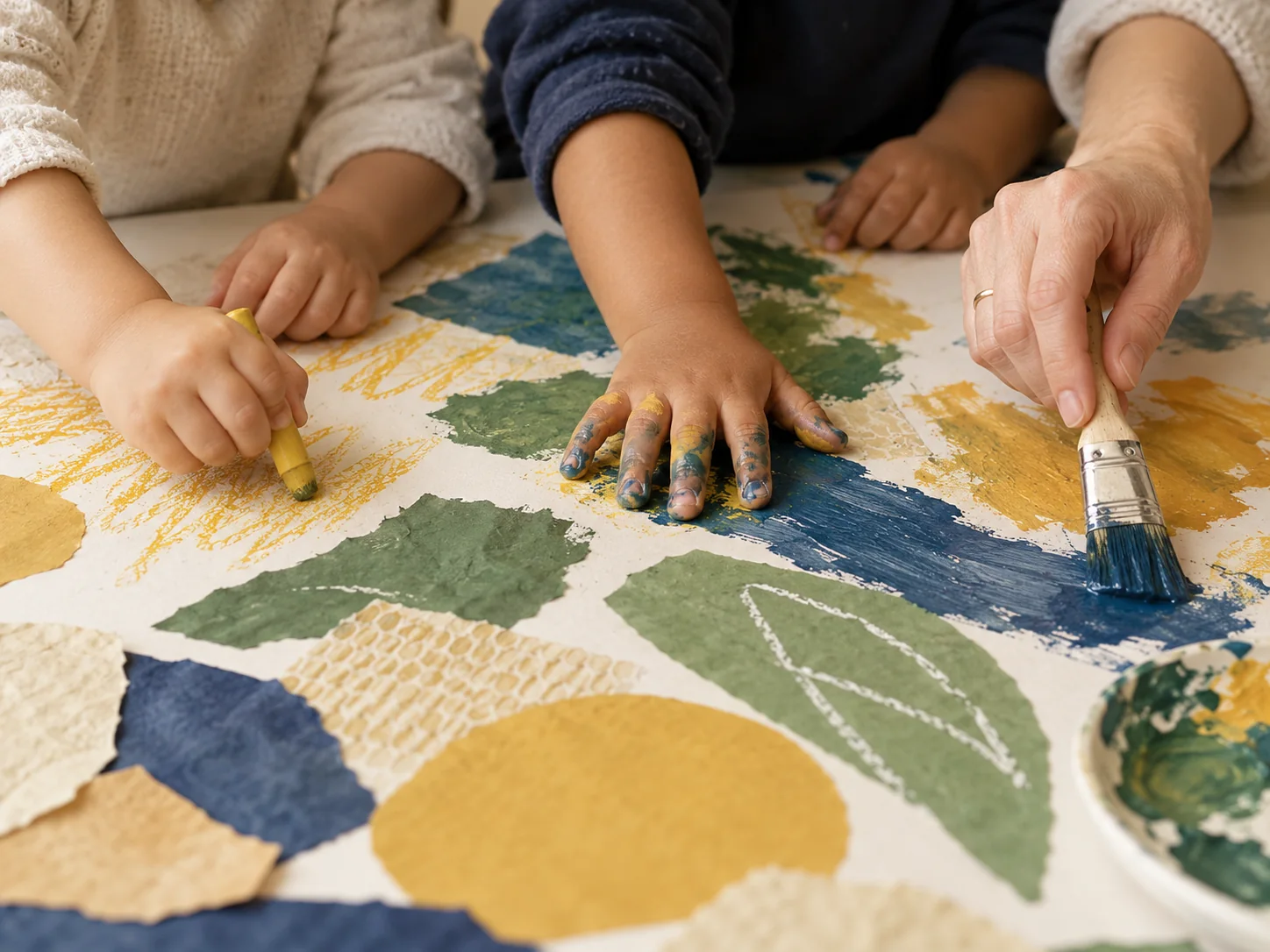
Begin with activities children can understand and enjoy, then introduce new experiences.
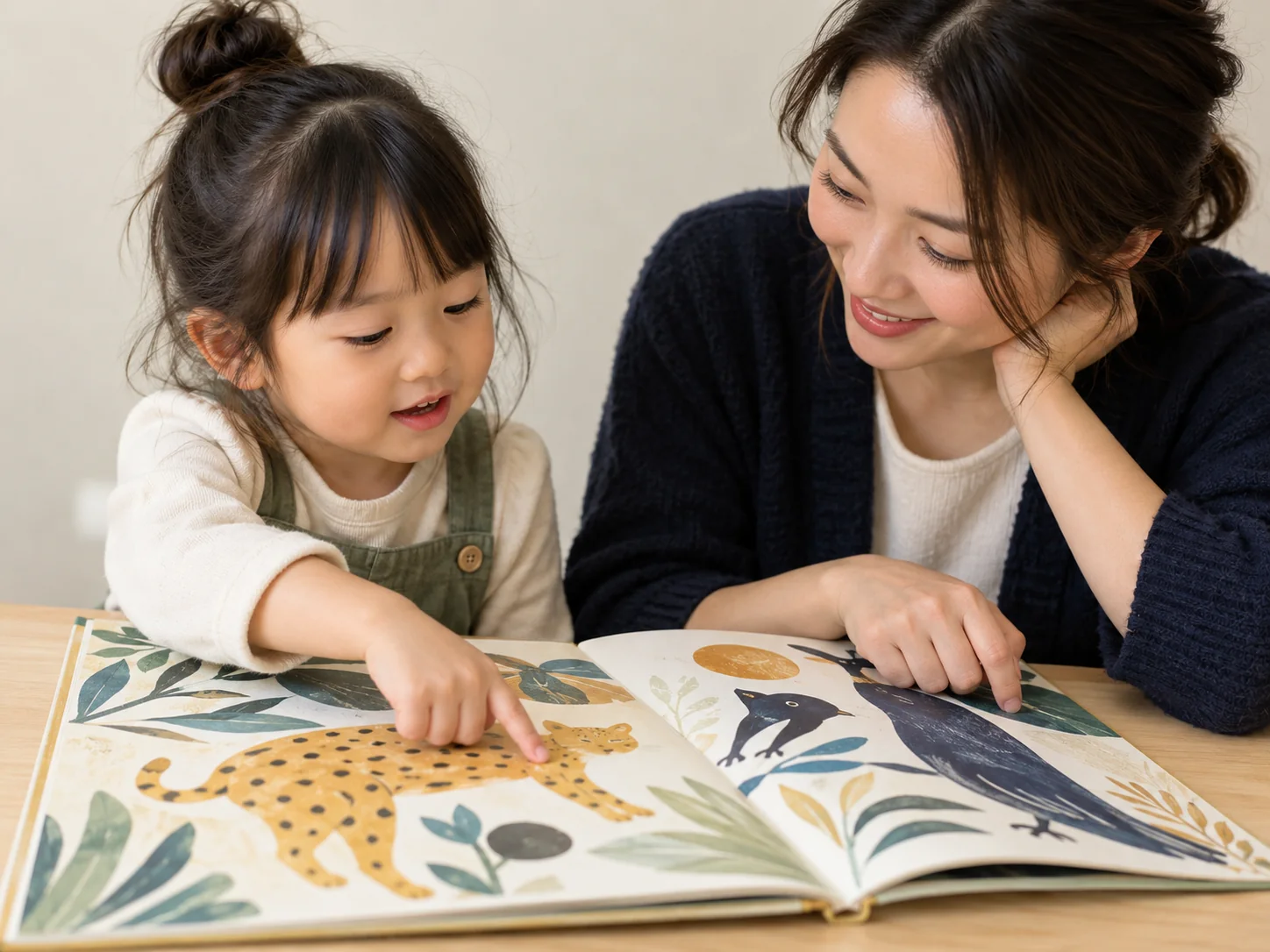
Share stories, look closely and talk about ideas.
Reading and conversation create opportunities to listen and express themselves.
Through role play, music and group activities,
children practise taking turns, cooperating and talking about feelings.
Build, explore materials and investigate small questions.
Children try things, notice changes and share their discoveries.
Turn broad learning goals into activities children can take part in.
These themes and activity ideas are adapted to age, interests and participation.
01 / 03
Move from noticing a picture to sharing an idea.
Connect words and stories with what children want to express.
Look for clues in pictures and wonder what comes next.
Retell a favourite moment using picture cards or a toy.
Name familiar objects and sort them by use or feature.
Describe positions, ask questions and explain a choice or need.
How educators guideModel a response, then allow time.
Use short questions and follow-ups to support expression without completing every answer.
What parents can noticeNotice pointing, naming and increasingly detailed explanations, as well as willingness to ask, listen and respond.

02 / 03
Through enjoyable interaction,
explore rhythm, rules and other people’s ideas.
Listen to a rhythm and respond with clapping, a drum or movement.
Explore fast and slow, stopping and starting, and copying a pattern.
Choose roles in a pretend shop or animal story and agree on simple rules.
Take turns, ask for help and express feelings while working towards a shared task.
How educators guideMake rules clear while allowing choice and negotiation.
When ideas differ, describe what happened and explore a response together.
What parents can noticeLook for waiting for a turn, understanding a simple rule, making a request and expressing a feeling with words or gestures.

03 / 03
Make questions something children can see, handle and try.
Give ideas more than one way to take shape.
Build a bridge, compare heights and lengths, and sort by colour or shape.
Matching, sequencing and simple quantity games reveal relationships and change.
Notice a leaf’s texture and shape, try a rubbing or collage, and combine colours.
Choose materials to turn a discovery into a personal creation.
How educators guideOffer age-appropriate materials and time to investigate.
Ask what they noticed and what else they could try, encouraging comparison and adjustment.
What parents can noticeNotice material choices, comparisons, structural changes and explanations.
Value the exploration rather than expecting identical finished work.
Ages 1–3
Explore sounds, pictures, movement and simple games to build an interest in taking part.
Ages 3–6
Practise expression, attention and interaction through shared reading, role play and hands-on activities.
Ages 6–8 · Extension
Discuss learning options around reading interests, taking part in tasks and developing learning habits.
Age helps guide the conversation.
Class format, duration, teaching languages and fees are confirmed during your enquiry.
Children of the same age may have different interests, ways of communicating and learning rhythms.
Begin with something they are willing to try, then introduce a new challenge.
Activity example
A blue strip of fabric becomes a river, large blocks form two piers, and one continuous wooden plank forms the bridge deck for a toy animal.
The question is simple: how can we help the animal get to the other side?
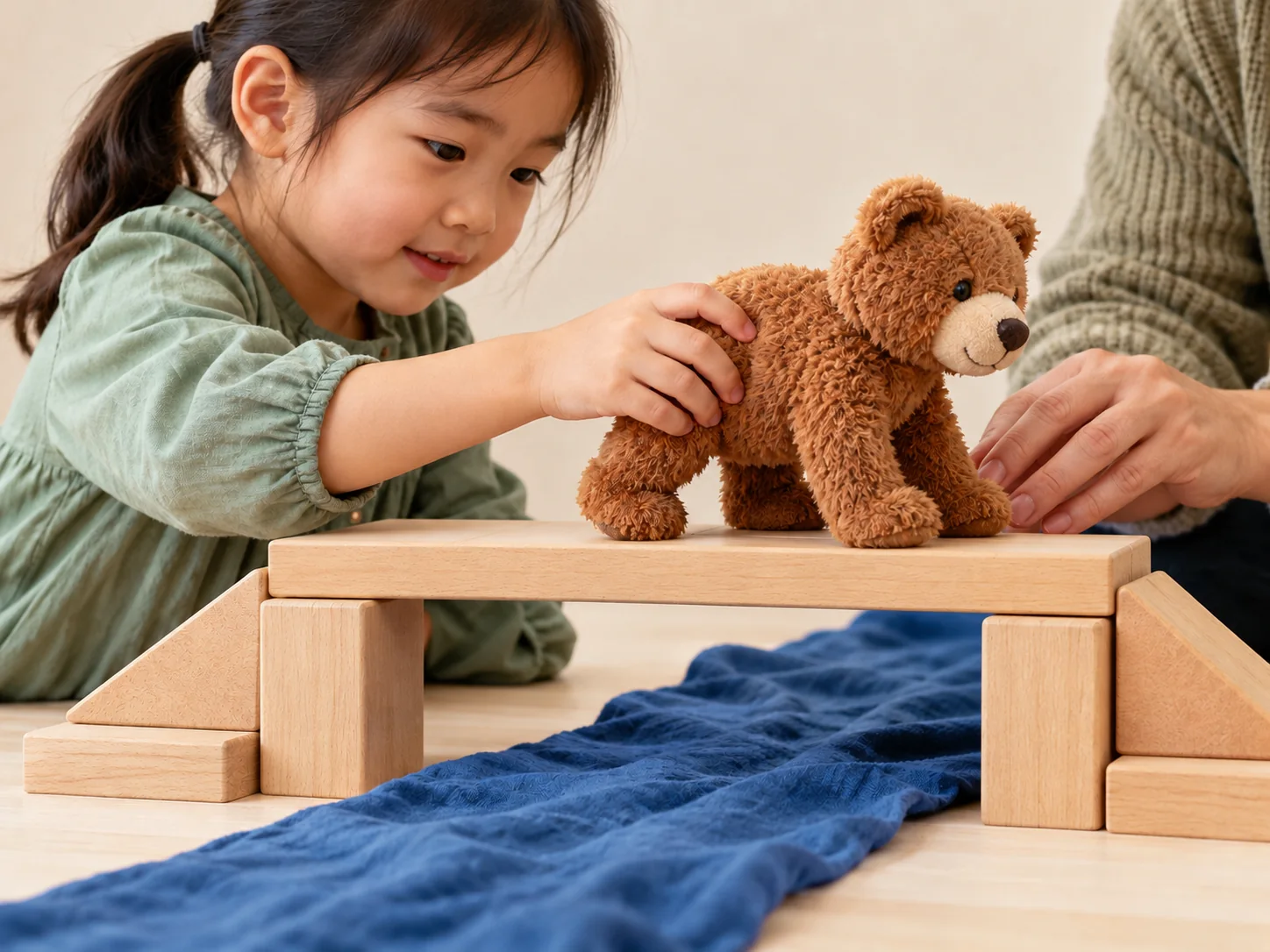
Choose the toy animal, look at the river’s width and describe an idea for the bridge.
Build two stable piers and rest both ends of a continuous plank securely on them.
Then test the crossing with the toy.
If it is unstable, adjust the base and support positions first.
Explain the materials used, what changed and which approach helped.
Words, gestures, a drawing or the construction itself can tell the story.
This is an activity design example.
Materials, difficulty and participation are adjusted to the child’s age and circumstances.
Alongside whether an activity worked, notice what the child chose, which approaches they tried, how they adjusted and how they shared a discovery.
These observations help educators and parents discuss a next step.
Participation can begin with pointing, choosing, copying an action or a short response.
Educators allow time to observe and respond, gradually inviting more expression.
A theme can use different materials, questions and levels of difficulty.
Educators adjust to interests and participation rather than using age as the only guide.
Share specific observations about choices, attempts, expression and adjustments, then discuss an experience to add next.
A single performance is not a fixed judgement of ability.
Tell us your child’s age and interests so we can discuss suitable learning arrangements.
Enquire about classes